
Data Abundance in Energy: From Information to Action
TL;DR
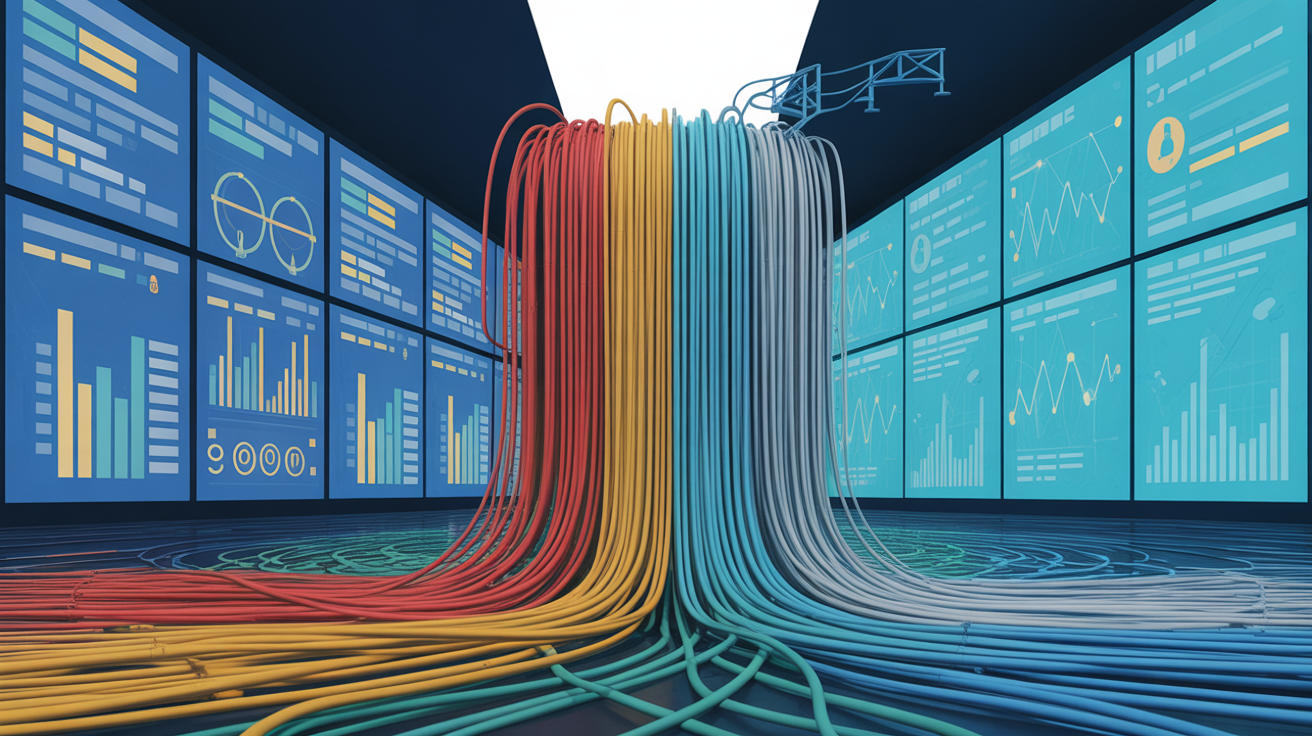
The energy sector is drowning in information—from smart meters, DERs, wholesale markets, and IoT sensors. But while volumes explode, the real advantage isn’t in collecting more data—it’s in turning that data into actions that reduce costs, cut carbon, and engage consumers.
The sector is one of the most data‑intensive industries on earth. The challenge is not generating information—it’s making sense of it. Operators, suppliers, and consumers are overwhelmed. The true advantage lies in converting noise into timely, role‑specific action that protects reliability, margins, and sustainability.
Summary
Energy has entered the era of information abundance. Power flows, weather forecasts, wholesale prices, and millions of consumer signals can now be captured, stored, and modelled in real time. This marks a generational shift: a sector once reliant on static infrastructure is now driven by live data streams.
These flows already underpin four areas of transformation: operational optimisation through smart grids; renewable integration via forecasting and storage; predictive maintenance that reduces downtime; and consumer engagement through smart tariffs, apps, and behavioural nudges.
Industry pioneers aren’t just managing volatility—they’re monetising it. Tesla uses analytics to orchestrate batteries, Enel optimises renewables with IoT-driven intelligence, and National Grid matches weather and demand forecasts in real time.
Yet amidst all this progress, one truth stands: information alone doesn’t create value. Success comes from turning overload into decisive insight—helping engineers, analysts, and households act quickly, efficiently, and profitably.
Key Takeaways
- Real-time visibility is now standard through smart grids, IoT, and advanced modelling.
- Predictive analytics are already reducing failures, balancing renewables, and cutting costs.
- Market leaders succeed with hybrid models—third‑party platforms combined with bespoke in‑house analytics.
- The new battleground is not access to data but the ability to distil it into clear, actionable guidance.
Introduction: Energy at a Turning Point
The energy industry is being reshaped by three forces: tightening climate targets, decentralised generation, and growing consumer expectations. At the same time, a torrent of raw data pours in—from SCADA feeds and smart meters to wholesale market updates.
This abundance is powerful, but also overwhelming. Dashboards proliferate, yet clarity remains elusive. More data does not equal better decisions. The real challenge is how information is filtered, combined, and delivered where it matters most.
The industry has passed a tipping point: no longer struggling with visibility, but with signal. Petabytes stream through the system daily, yet often sit in silos or lack the context needed to drive action. A pricing analyst adjusting tariffs, a grid operator juggling demand, or a household charging an EV doesn’t need another chart—they need a clear next step.
Early adopters show what’s possible. Grid operators blend weather with demand data to integrate renewables. Retailers apply predictive models to protect margins and guide consumer behaviour. Innovators use asset telemetry and AI to pre‑empt failures. But the common thread is clear: progress depends on transforming raw volume into clarity.
The Data Revolution in Energy
Smart grids are now live digital twins of the network, with thousands of sensors feeding operators continuous updates. Renewable forecasting combines satellite imagery, weather prediction, and dispatch data to balance variability every hour—or even every five minutes in real time.
Predictive maintenance uses machine learning to flag risks weeks before outages occur, cutting downtime and insuring reliability. And at the consumer level, analytics power dynamic tariffs, carbon-intensity alerts, and bill forecasting nudges, transforming engagement from passive billing to active participation.
These shifts show why energy is no longer infrastructure-bound—it is data-driven.
The Pricing Analyst’s Challenge: Data in Practice
For a pricing analyst in a retail energy company, the issue isn’t scarcity of data—it’s extracting clarity from fragmented sources.
- Wholesale volatility: Prices swing daily with renewable output, but wholesale signals, network charges, and weather models are rarely integrated in one place.
- Demand shifts: Smart meter data reveals consumer responses to tariffs, yet usage and billing systems exist in different silos, delaying insights.
- Margin risks: A tariff that looks profitable in aggregate can turn loss‑making once local transmission costs are factored in—something only surfaced by stitching disparate datasets together.
- Communication gap: Even when analysis is complete, outcomes must be reframed for customers to digest or set within the context of the contractual arrangements.
The outcome is a paradox: abundant data is available, but analysts spend more time reconciling it than shaping strategy. Action lags behind insight—and opportunities are lost.
Towards a Data-Driven, Consumer-Focused Future
The analyst’s challenge reflects the sector as a whole. Decentralisation, sustainability, and consumer expectations all demand real‑time, role‑specific intelligence—but data often sits in static dashboards or isolated databases.
Leaders are already breaking this barrier. Tariffs that update automatically with market shifts, crews dispatched before equipment fails, households rewarded instantly for moving demand—all show how analytics can flow directly into action.
Real-World Examples: Data-Driven Innovation in Action
CompanyChallengeData-Centric SolutionOutcome & Next HorizonNational Grid (UK)Balancing renewables with demand peaksWeather-enhanced forecasts + dispatch analyticsStable grid at >40% renewables; next: EV data for sub-hour balancingEnel (Italy)Optimising global renewable fleetIoT sensors + predictive maintenance + digital twins14% O&M cost reduction; next: AI impact optimisationTesla EnergyMonetising household & commercial storageReal-time charge/discharge orchestrationLower bills + reduced volatility; next: swarm control for multi-GW VPPsXcel Energy (USA)Reducing peak load stressTOU pricing via smart meters + mobile nudgesPeak demand shaved 5–8%; next: rooftop solar integration into tariffs
And elsewhere—from AEMO in Australia to Statnett in Norway—operators are pairing mature vendor platforms with bespoke analytics to do the same.
Adapting to Industry Change and Consumer Demands
Decentralisation is making two‑way flows the new normal. Orchestration platforms now aggregate rooftop PV, batteries, and EVs into dispatchable resources that behave like conventional generation.
Sustainability pressures are embedding carbon data into daily decisions. Real-time dashboards don’t just report emissions—they inform operational choices, driving low-carbon dispatch automatically.
And consumers demand more than bills. They expect personalised insight: predictive outage alerts, tailored efficiency tips, and tariff plans tuned to their behaviours and values. Turning passive end-users into active participants is as much an analytics challenge as an engagement one.
Why Data Alone Isn’t Enough: From Abundance to Clarity
Visibility was yesterday’s problem. Today, the challenge is overload. Engineers sift through endless dashboards; traders juggle multiple market feeds; households can’t interpret raw usage curves. Advantage now comes from distilling data into unambiguous guidance: the right prediction, nudge, or automated action at the right moment.
The energy sector’s transformation is already reducing outages, cutting emissions, and enabling demand participation. But the future will be decided not by who owns the most data, but by who delivers the clearest signal.
Data isn’t value in itself; it is raw material. The winners will be those who refine it fastest—into actions that stabilise grids, protect margins, empower consumers, and accelerate decarbonisation.