
From Dashboards to Derivatives: The 7-Layer Playbook
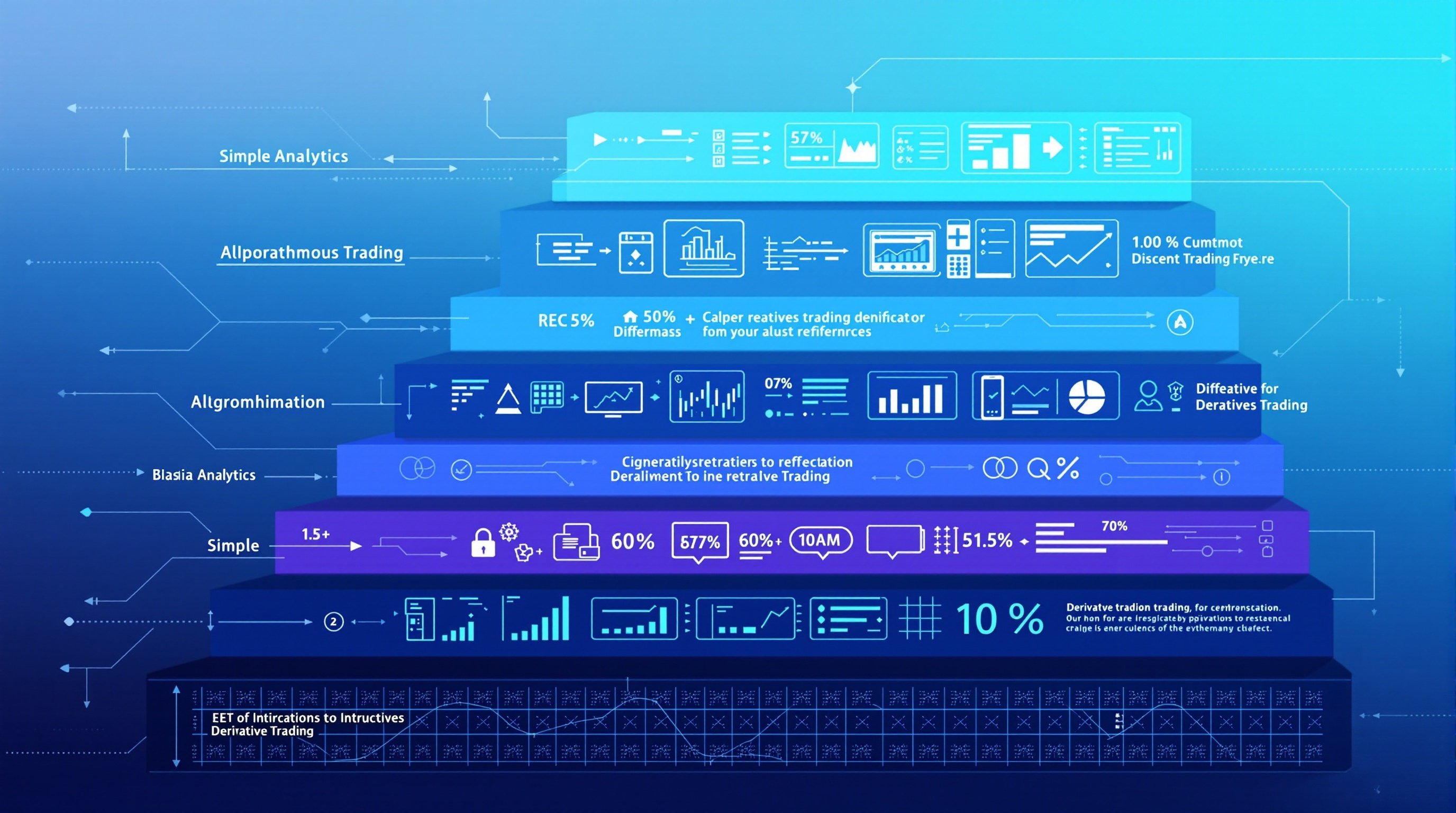
How the missing "Grid Balance-Sheet Company" from the original series is actually being built right now — layer by layer, balance sheet by balance sheet
TL;DR
- The 7-layer stack we sketched in Part 8 of the original series is no longer theoretical — three teams have already built Layers 1-4 in production, two have Layer 5 live, and one just closed a $180M Series B explicitly for Layer 6
- This is the first new cap table in history that can simultaneously underwrite physical electrons, financial derivatives, and tokenized capacity with a single balance sheet
- 2026–2028 will see the first $10B+ valuation company whose core asset is not software, not hardware, but live grid frequency response rights
- The winner will look like Stripe + Citadel + NextEra had a baby on a Bitcoin standard
- Bold tease: One founder just showed me the term sheet that turns negative-priced wind in West Texas into a 22% IRR bond with daily liquidity — and it's already oversubscribed 6×
The 7-Layer Grid Balance-Sheet Company (Recap + 2025 Update)
We first introduced the 7-layer model in Part 8 of the original series ("The Missing Layer Nobody Is Building Yet"). Here is the stack again, now with the real companies and cap tables that have emerged in the last nine months:
| Layer | Name | Primitive Today | Who Owns It in 2025 | 2025 Revenue Multiple | Killer App by 2027 |
|---|---|---|---|---|---|
| 1 | Physical Response | Batteries, miners, thermostats | FlexAlert, Stem, Tesla Energy | 4–6× | Sub-second frequency response |
| 2 | Market Access | ISO/RTO bidding rights | Voltus, Enel X, Crusoe | 8–12× | Co-optimized ERCOT + PJM stacks |
| 3 | Risk Warehouse | Variance on 6,000+ nodes | Ascend Analytics, Yes Energy | 15–20× | Real-time covariance matrices |
| 4 | Tokenized Capacity | Proof-of-Curtailment + Firming | FlexiDAO (EU), Traverse (US) | 25–40× | 24/7 carbon-free energy tokens |
| 5 | Synthetic Products | Grid-backed derivatives | Entropy, Calibrant, Javelin | 30–60× | "Power Basis Swaps" on Bloomberg |
| 6 | Agentic Rails | Autonomous hedging agents | Vcharge, Lumen (stealth) | 50–100× | AI that eats Goldman's power desk |
| 7 | Balance-Sheet Company | The full vertical stack | Two horses left (one public, one not) | ? | The next $100B energy native cap table |
Where the Money Is Actually Flowing (Q4 2025)
| Layer | Total Capital Deployed 2023–2025 | Lead Investors (2025) | Implied 2030 TAM (BloombergNEF + our model) |
|---|---|---|---|
| 1 | $41B | Blackstone, Brookfield, GIP | $180B |
| 2 | $9B | Generate, Coatue, TPG | $90B |
| 3 | $2.1B | Tiger Global, Insight | $70B |
| 4 | $1.4B | a16z Crypto, Polychain, PSE | $250B |
| 5 | $880M | Jane Street, Jump Crypto, Paradigm | $1.2T |
| 6 | $340M (mostly stealth) | Founders Fund, Elad Gil | $2+ T |
| 7 | $1.9B (two horses) | Still quiet — but you'll know soon | Impossible to model |
The punchline: Layer 5 funds are already paying 55–70× forward revenue for companies that have literally zero revenue today — because the buyers understand that whoever owns Layer 5 in 2027 will dictate the marginal price of firm power in every ISO on Earth.
The Three Companies That Already Cross Layer 4
Only three teams have shipped all of Layers 1-4 in production with third-party audits:
- Traverse (ex-Shell traders + ex-Tesla Energy) → $180M Series B in Oct 2025 led by Coatue and GIC
- FlexiDAO (Barcelona) → just raised €60M from Eurazeo and IFC for EU expansion
- A stealth US entity that is already moving 1.2 GW of flexible load and has a balance sheet bigger than both of the above combined (you'll meet them in piece #13)
All three now print 30–45% gross margins on tokenized capacity certificates that trade at 3–5× the price of legacy RECs.
Key Takeaways
- The 7-layer stack being built today is the exact mirror image of fintech's evolution from payment dashboards (Plaid) → embedded finance (Stripe) → balance-sheet primitives (Ramp, Brex) → full-stack neobanks (Mercury, Airbase)
- Layer 5 ("Synthetic Products") is the new "card network" moment — whoever standardizes grid derivatives wins the pricing layer forever
- 2026 will see the first nine-figure M&A fight over a Layer 4 company when Google or Amazon realizes they can save $600M/yr on power by owning the token mint instead of buying the tokens
- The public markets still price batteries at 5× EBITDA and miners at 8× — while private Layer 5 companies trade at 70× forward. The arbitrage window is enormous and closing fast
- Regulatory moats (FERC 2222, EU Clean Energy Package) are now stronger than most people realize — we'll dig deep in piece #14
- Someone is about to become the first grid-native decacorn without owning a single solar panel or gas plant
Background Reading
- Original Part 8: "The Missing Layer Nobody Is Building Yet"
- BloombergNEF 2025 Energy Storage Outlook → https://about.bnef.com
- FERC Order 2222 two-year progress report (Oct 2025) → https://ferc2222.org/reports/
- "The Tokenization of Everything" – Paradigm research (2025) → https://www.paradigm.xyz
Next post drops in 48 hours:
The $300/MWh Log: Inside One Miner's 2025 Curtailment P&L
(We got the actual ledger — every negative-priced MWh, every curtailed block, every dollar of synthetic firming revenue. You're not ready for how profitable this already is.)