Deep analysis and insights covering energy markets, cryptocurrency, trading strategies, fintech innovation, and blockchain technology.
U.S. battery storage is exploding to 200+ GW by 2035 — but most projects ignore the 70–85% revenue uplift from stacking ancillary services.
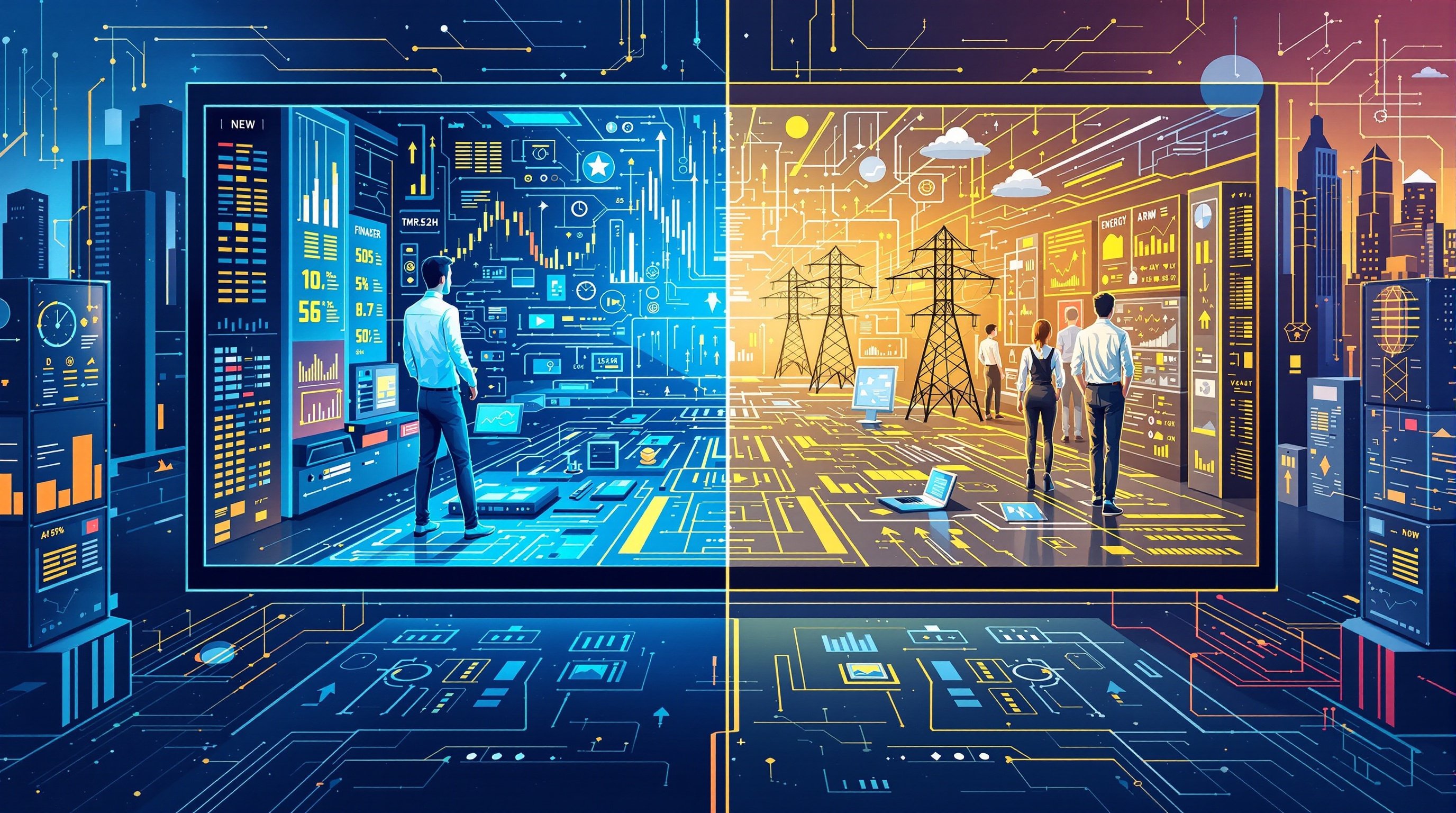
Energy is drowning in data, but starving for context. Dashboards are easy. Making them matter is hard.
Across the utilities value chain—from grid operators and engineers to retail suppliers—the same challenge emerges: data is plentiful, but without specialized knowledge, it becomes noise, not insight.
The energy sector is drowning in information—from smart meters, DERs, wholesale markets, and IoT sensors. But while volumes explode, the real advantage isn’t in collecting more data—it’s in turning that data into actions that reduce costs, cut carbon, and engage consumers.
Energy software is easy to build. What’s hard is making it matter. Across the sector—from grid operators to retail suppliers—the challenge is the same: data without context is just noise. Great products reduce effort by embedding industry-specific insight.
Automated analytics are revolutionizing customer experience by enabling companies to deliver personalized products and services that meet the unique needs and preferences of each customer.
Overcoming data overload requires a strategic approach that focuses on the most relevant data and prioritizes the most important insights. By following best practices for data management and prioritization, organizations can harness the power of data to drive better decisions and achieve their goals.
In the future of work, the most valuable skills will be those that are uniquely human: critical thinking, creativity, communication, collaboration, data literacy, adaptability, and emotional intelligence.
Automated synthesis of data drives innovation by helping companies identify new opportunities, improve products, and create new business models. Companies like Netflix, Amazon, and P&G are already using this approach to gain a competitive advantage.
Information abundance is transforming healthcare, enabling personalized medicine, predictive analytics, remote monitoring, drug discovery, and improved efficiency. The future of healthcare is data-driven.
In the age of automated analytics, data literacy is more critical than ever. It empowers people to interpret results, ask the right questions, avoid misinterpretation, make informed decisions, and communicate effectively.
No-code and low-code analytics platforms are democratizing data, empowering non-technical users to explore data, generate insights, and make data-driven decisions without writing code.
Get the latest insights on technology, energy, and finance delivered to your inbox.